Thursday, April 12, 2012

Shirky's Book

I'm not entirely sure what to put in today's blog post, so I've decided to just write about what I think of Shirky's book so far.  I've never really read anything like an analysis of how the technology that has developed throughout our lives has changed how group dynamics work in our society--which is what this books appears to be.  So it's interesting, but it gets a bit dry in places, especially when it comes to communication charts and whatever Shirky called them. Some kind of power slope or something (I did read it, I swear!).  I mean, I know those things are important, but I just kind of lost interest in places. I also think it's interesting that he hasn't mentioned Facebook yet.  I know this book is a few years old, but it's not old enough that Facebook wasn't already HUGE at the time.  Facebook is probably the most significant group use of digital technology in history.  Maybe Shirky's saving that issue for later, seeing as it can get so extensive?

Wednesday, April 11, 2012

Bad Web Design
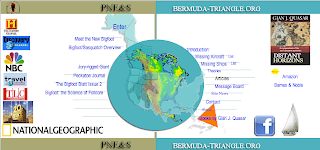

Remember when the internet was new and websites were often plagued by horrible design choices by people who had no idea what they were doing? Nowadays people actually have eyes and know what looks good and what doesn't.

I mean, no one makes it a mess of text and images, right?


Okay, but at least most people have some concept of color usage these days.


Alright... So the purple on blue and yellow on blue-green isn't the best choice for this webmaster. Surely people have learned that animated gifs are not what makes the internet awesome... right?

I spoke too soon.


At least I haven't seen an under construction logo while surfing these bad websites. I mean, I think in 2012 we've all realized that websites are living things that always evolve, hence the logos are unnecessary.


Maybe I should just give up on hoping that the internet will look pretty. It looks like people are still going to be making these amateur mistakes. Whether it's trying to use complex features that make it impossible to navigate your site or disgusting color choices, these people make their companies look bad. The only advice I can give is to look at the website I mentioned earlier in this post and compare your site to the ones displayed. If it looks similar, there's something wrong with it.

Tuesday, April 10, 2012

Cutting Out the Middle Man

In Chapter 2 of Clay Shirky's book, "Here Comes Everybody," he makes an observation that the mass photosharing of Flickr would not have been possible if someone had tried to coordinate. He says there is a "distinction between Flickr coordinating users versus helping them coordinate themselves" (33).

Is this referring to a future without the middle man? We are already seeing a shift from the previously private and specialized industry of publishing to becoming something that anyone can do. For example, once I finish typing up this post, I'm going to click a button that says "publish post." In essence, I'm publishing something for the rest of the world that didn't first have to go through copyediting, permissions, etc.

So is this a good thing or a bad thing? We can now all be publishers, but what is going to happen to the publishing industry? Shirky makes another salient point that we experienced this similar chaos and confusion with the emergence of the printing press. Suddenly scribes were put out of the job. A market that had been available to only a select few had suddenly become publicly available to almost everyone. I would say that things have worked out since then, so do you think we are doomed with a mush of unedited, unworthy works or is this a step toward a more knowledgeable world? Are we in the middle of a revolution that will settle down as we learn to adapt?

Monday, April 9, 2012

Sensationalism in the Digital World

Dear God, I cannot express in words how completely tired I am of seeing dead celebrities on the cover of magazines.


Celebrities are truly immortal, and I don't just mean this in the schmaltzy way in which their contributions to this country will live on forever. I mean that even though mortality has taken away their earthly form, the go on continuing to earn money even after they die. It is incredible to me. The money from movie sales, record sales, estate auctions, merchandise, and everything in between, they all receive a cut as the contributing artist. According to Forbes magazine, the highest earning dead celebrity in the country right now is Michael Jackson. Try to act surprised. And he has that first spot firmly secured, too. He earns $125 million dollars every year, clearing the second placeholder, Elvis Presley, who only makes $55 million every year. But considering he's been dead for over fifty years, that's not bad. That's probably where Michael Jackson will be in about half a century.


I hate it when celebrities die of questionable causes and we automatically turn them into martyrs. And it doesn't always happen, either. When Heath Ledger died three years ago, there was a lot of coverage in the news, but there were no Oprah specials or anything like that. It was a tragedy to this country that an incredibly talented young man had lost his life, but it was nothing like this Whitney Houston ordeal in which we've completely blown her out of proportion. She was doing A LOT of drugs, and engaging in reckless behavior, and when she dies of an overdose, all of the sudden, this country is ready to canonize her. It is completely ridiculous. We talked about sensationalism in my TCOM classes quite often, and about Little White Girl syndrome. Two words: KASEY ANTHONY.


I don't have a very rosy outlook on this kind of thing. I don't think it's going to get any better. I think it's going to take some kind of world-wide pandemonium to get America to reevaluate its priorities in the media.

Thursday, April 5, 2012

So I Got Another Facebook.

While this isn't altogether relevant to what we've been discussing in class recently, it is somewhat relevant to the class in general, and to something I've posted before...I got another Facebook.

While the old issues I've had with it in the past have been overshadowed by my reasoning for making a new profile, new issues seem to have sprung up.  First of all, I am unable to get this Timeline thing that nearly everyone else has.  If I go to the page that is supposed to have a "get it now" button, that simply isn't there for me.  It seems that certain people cannot access this feature, and I am one of them. Even if I were to use a different computer or browser, it still would not let me access this feature.  There is simply nothing I can do to get the "new and improved" Facebook.

The second issue I have is the fact that I haven't even had my new profile for a week and I am already blocked from sending friend requests.  This is because I have been requesting too many people I don't have enough mutual friends with.  But...since my profile is new, I'm not going to have many friends period, so I WOULD have mutual friends if I could add everyone I know.  Basically, I have to have friends to get friends. My ability to make friend requests and send messages are both blocked for a week now....pretty much for no other reason than that I have a new profile.  This is a problem.

Tuesday, April 3, 2012

Typography... Why Do We Care?

Dr. Donnelly asked us at the end of class to come back with an answer to the question, "Why is calligraphy important to our Digital Literacies class?" I'm not sure if he meant calligraphy or typographysince those are two very different things. Calligraphy is handwritten, while typography is printed matter. Calligraphy isn't directly related to our class, but that inspired typography, and the reason why it was so important to Steve Jobs.

I do think typography is important, although after taking three classes that gushed about typography and having read 3 books all about typography, I feel like people may be going overboard. I have lots of respect for people who spend their life making the typography that we take for granted, but does it really matter if the curve of the S is less than a hair uneven? I do admit I probably don't realize the work that goes into typography since it's such a commonplace thing, and maybe that smidgen of space destroys the whole aesthetics of the font.

To answer the question, typography is an important part of our class (and using the internet in general) because we are always using typography. We always use it every day and with so many options out there, we have to figure out what is the best font to represent our work.

Monday, April 2, 2012

Remembering Wrong...

"It's my job to creep you out," Professor Donnelly says.

Well done, sir. When talked about the concept of placing chips in human beings, and while it sounds like a completely science-fictional concept, it's being done to animals all the time, mainly pets, who if run away, can be easily tracked down. There's a man in Saudi Arabia who developed a chip that can be placed under the skin of human beings that not only tracks them, but also releases a deadly dose of cyanide into a person's blood stream if they are being disobedient or acting contrary to the laws of their government....

Now granted, this was about three years ago, and it didn't really come to fruition. But could you imagine? With The Hunger Games coming out and everything, there has been a huge revamp of interest in dystopian literature. Every time a new dystopian novel comes out, Brave New World, 1984, Fahrenheit 451, all of these novels experience a new wave of interest. Chips under the skin has already become a thing of reality. Now its just a matter if they're going to deem their use on humans acceptable or not.

This class often makes me anxious about the way the world is nowadays. It makes me scared. When Ranger just brought up some developments in the Treyvon Martin case that were released last Monday, how in fact it WASN'T an unsolicited vigilante act, but rather a case of self defense, even though Treyvon didn't have a weapon on him, he was physically assaulting the man who shot him.

Now, regardless of whether or not that's true, it reminds me so much of Animal Farm, it's frightening. It was a thought I was willing to bring up in class if I wasn't concerned it would take forever to explain. Basically, what happened was that after the animals chased the farmer off the farm and reclaimed it as their own, they began to form a new chain of command. Near the top of this is a pig named Snowball, who was a leader for the animals in their new government of sorts. There was a great battle in which the farmer tried to recapture the farm with the help of his men and Snowball was shot during the battle trying to take down the farmer. He sustained grievous wounds but was rewarded for his bravery. Then in a mutinous revolt, another pig named Napoleon used dogs to chase Snowball off the farm, thus opening the position for a leader. As the animals began to question this, saying, "Oh, no, Snowball was not a traitor! He was a true patriot, he fought bravely in the Battle of Cowshed and was wounded!" Then the "Grima Wormtongue" pig whose name currently escapes me says, "Oh no, comrades, he wasn't wounded, that never happened at all. He was actually fighting FOR the farmer. You are recollecting incorrectly." Or something along those lines. And even though the animals were convinced they'd remembered it one way, they resolved to think that Snowball was a traitor.

Now suddenly, this topic of Treyvon Martin has disappeared. No one's talking about it anymore. Its as if we all resolved to draw a solid conclusion based on here-say. And that's scary to me. And while it might be good that I'm thinking about these things in a very critical way, I don't like how uneasy it makes me feel. When my kids ask me what it was like when I was growing up, I don't want to say that the only thing I remember is being worried about the future. I suppose there are two ways I could look at it. The first is that it was a great time to be young. The voice of the young people hadn't been louder since the 1960s, and we were always eager to see what happened tomorrow...or some nostalgic nonsense like that. I don't want to say that we worried about the government and how they were going to screw us next, or how we had to resort to riding horseback because gas prices got too high